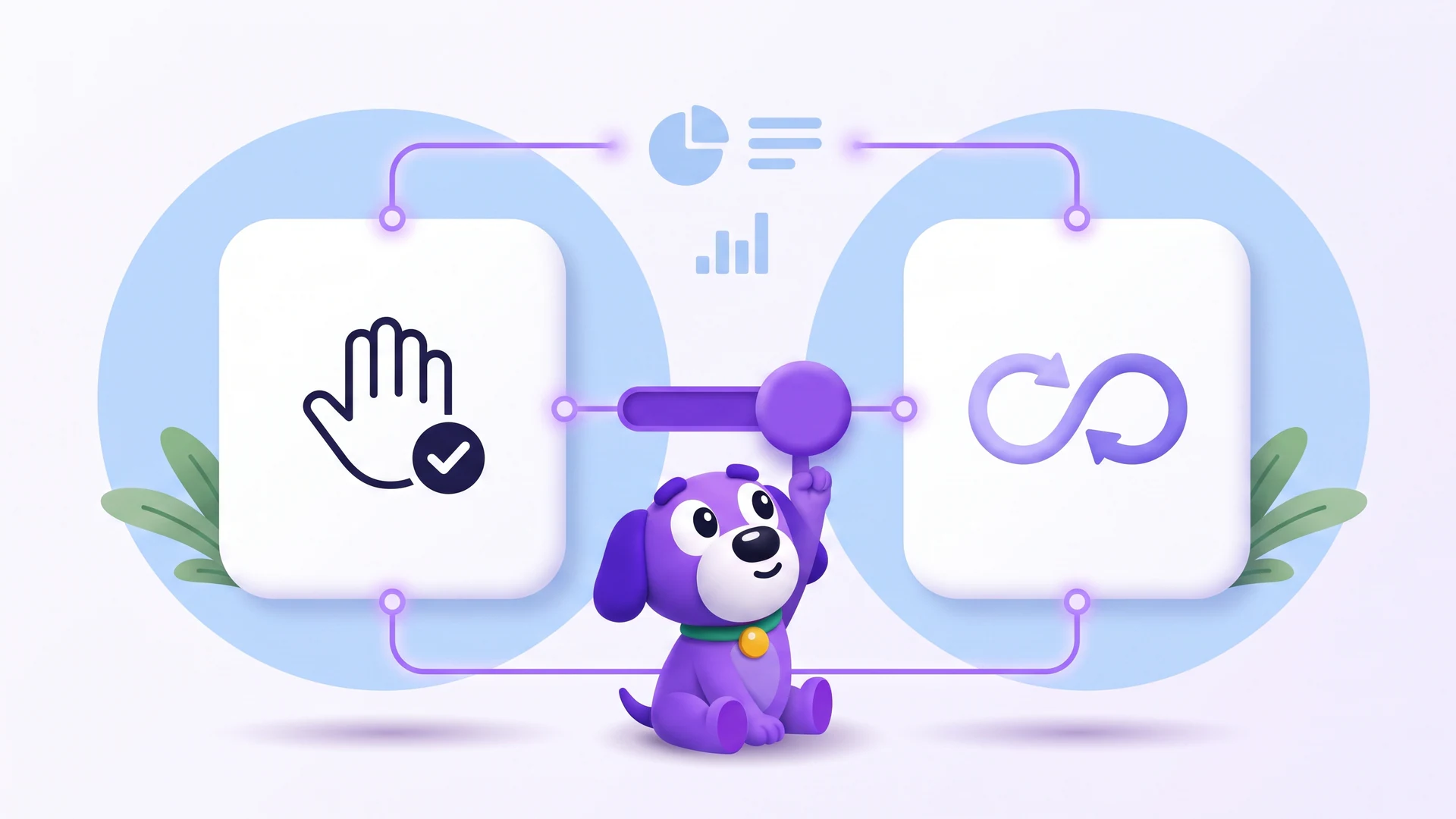
Autonomy is not an on/off switch. An agent can research, summarize, classify, suggest, execute, or learn; each action carries a different scope and risk. The right architecture grants more autonomy to reversible, verifiable tasks and requires validation when an error impacts a person, a brand, or sensitive data.
This guide is not a collection of abstract advice. It accompanies a Flairo mission located at the top of the page: answer a few questions, get a recommendation tailored to your context, and copy the deliverable into your CRM or next sales sprint. No account creation is required to test the experience.
The decision this guide should help you make#
For each step, choose between three modes: copilot that recommends, rule-based autopilot that executes within a bounded scope, or expanded autonomy with monitoring. The mission on this page generates a matrix tailored to your volume, market, and risk tolerance.
Breaking down the SDR role into decisions#
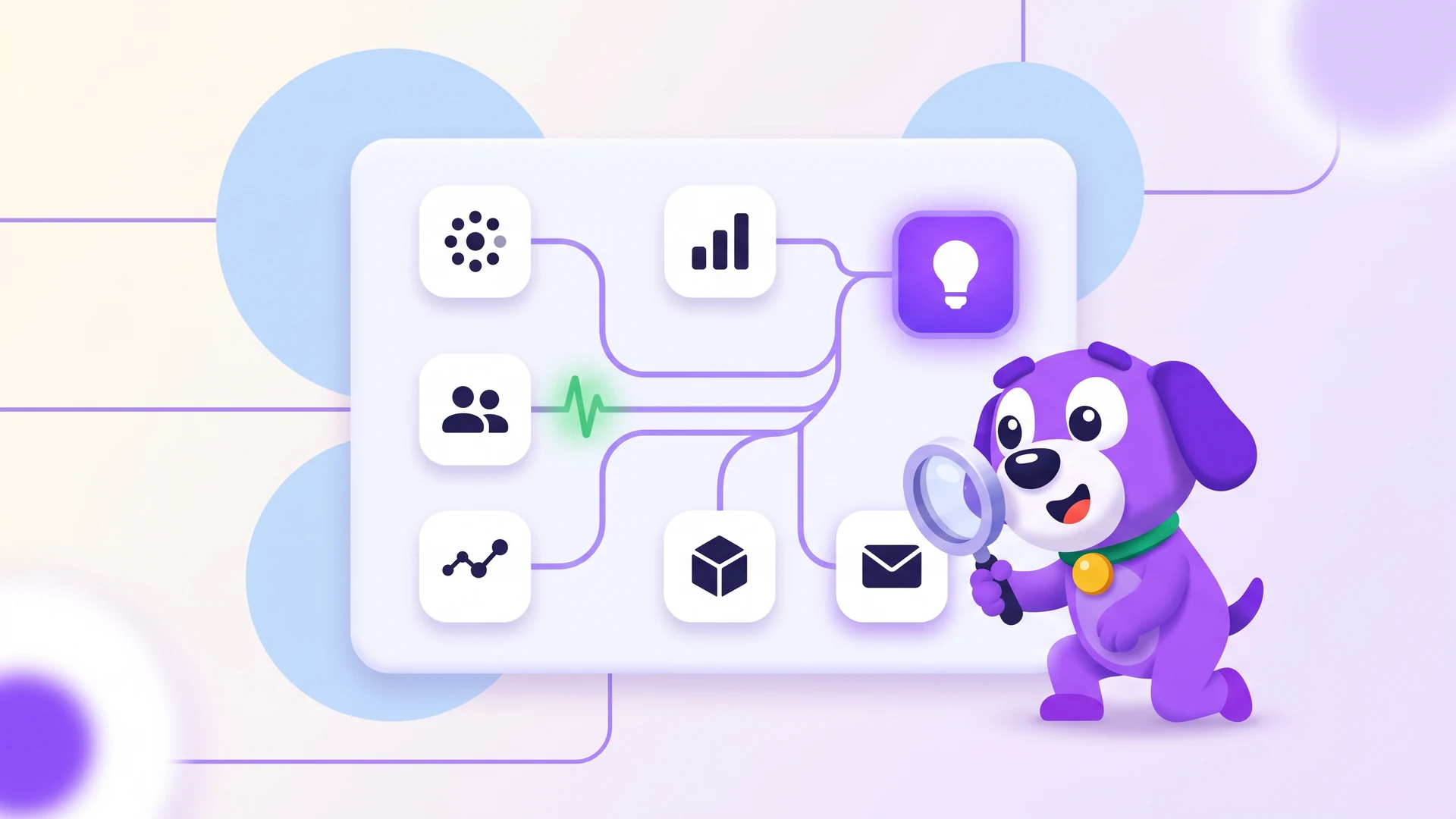
Separate data collection, source verification, scoring, contact selection, copywriting, sending, follow-ups, reply classification, and CRM updates. An internal summary error is recoverable; a message sent to the wrong executive is not always. Assign each task an error cost, a control capacity, and an owner.
Start with observable tasks#
Account research, public page summarization, formatting, and drafts are good candidates when sources remain visible. Sending and responding require more rules. Never let an agent turn an assumption into a fact. The copilot, autopilot, and agent guide details these levels.
Create technical and editorial guardrails#
Define allowed domains, maximum volume, sending hours, required fields, forbidden words, confidence thresholds, approval workflows, and a kill switch. Log prompt, data, output, version, and action. Supervision must make it possible to understand an incident, not just notice that a message went out.
Give humans higher-quality work#
The goal is not to have humans validate a hundred identical drafts. The agent should group simple cases, highlight exceptions, and explain its confidence level. Humans make decisions on ambiguous cases, adjust strategy, and handle conversations. Otherwise, validation becomes a rubber stamp and control disappears.
The actionable seven-day sprint#
The objective of a short sprint is not to automate everything. It serves to reduce uncertainty through a small number of observable actions. Keep the same target, offer, and definition of success for one week; otherwise, you won't know what explains the outcome.
- 01
Day 1 — map out all decisions in your current sequence.
- 02
Day 2 — assign an error cost, reversibility, and available evidence to each.
- 03
Day 3 — automate a low-risk internal task with complete logging.
- 04
Day 4 — test rules on edge cases and incomplete data.
- 05
Day 5 — gradually expand the scope after a real error review.
- 06
Day 6 — review replies, objections, and silences. Separate targeting, timing, and messaging issues before modifying the campaign.
- 07
Day 7 — keep what generated a useful conversation, document what failed, and pick a single hypothesis to test the following week.
Measure without self-deception#
Measure time saved, human correction rate, errors by type, negative replies, incidents, and sales quality. A lower cost per message is not a success if qualified conversations decline or domain reputation deteriorates.
Activity metrics—volume sent, views, or connections—describe output. Progression metrics—relevant replies, qualified conversations, held meetings, and opportunities—describe value created. A good learning loop always connects the two and retains a sample of actual sent messages.
How to use this with Flairo#
Start with the custom deliverable on this page. Then turn each hypothesis into a limited campaign: one segment, one signal, one angle, and one call to action. Flairo can centralize research, scoring, email and LinkedIn sequences, and reply analysis. The role of AI is not to dress up a generic message; it is to make a specific observation faster to act upon.
To build the complete system, continue with the signal-based prospecting guide, the ICP + timing scoring model, and the 30-day outbound playbook.