Key takeaways#
In France, B2B cold emailing is neither "always forbidden" nor "free to do just because the address is professional". You need to align two layers:
- 01
outreach compliance: profession-related purpose, notice, right to object, and data management;
- 02
technical deliverability: sender identity, authentication, address quality, and reputation.
This summary is educational and does not replace legal advice or guidance from your DPO for your specific situation.
What the CNIL says about B2B#
The CNIL states that electronic prospecting to professionals can be based on legitimate interest. The solicitation must be related to the person's profession or specialty.
The organization must, in particular:
inform the individual about the use of their email address for prospecting purposes;
allow them to opt out easily and free of charge;
respect this opt-out in future mailings;
verify the information provided when data originates from a third party.
The CNIL guidance published in June 2026 also clearly distinguishes between commercial, transactional, and relational messages.
The relevance test before sending#
Ask four questions:
| Test | Question |
|---|---|
| Profession | Does the offer genuinely relate to the contact's responsibilities? |
| Necessity | Do we need this data point for this outreach? |
| Reasonable expectation | Can the recipient understand why we are contacting them? |
| Impact | Does the volume, frequency, or channel create excessive nuisance? |
A buying signal improves relevance, but does not eliminate any legal obligation. "Your company is hiring" does not justify a message unrelated to the role.
Providing notice without turning the email into a contract#
The message must allow the recipient to identify the sender, the reason for contact, and a simple way to opt out. Depending on your data collection method and privacy policy, full disclosure can be provided directly or via an accessible link.
Example of an understated phrasing:
“I am contacting you in connection with your role as Sales Manager, based on publicly accessible professional information. If you no longer wish to receive messages from Flairo, simply reply "stop".
Adapt the text to your actual data processing. Do not promise a deletion that your system cannot execute.
The suppression list is not optional#
When an individual opts out:
- 01
stop all scheduled actions;
- 02
add the email address to a suppression list;
- 03
prevent its re-import into another campaign;
- 04
retain only the information necessary to honor the opt-out;
- 05
document the date and channel.
In Flairo, the "Do not contact" list protects all account campaigns, and sequences stop automatically upon unsubscribe or qualified reply.
Public data: the classic trap#
The CNIL reminds us that data published on the Internet remains personal data. Before using an address or profile:
identify the source;
verify compatible purpose;
collect only what is necessary;
define a retention period;
facilitate rights of access, rectification, and objection;
secure data and access.
Avoid enriching a contact profile with personal details unrelated to B2B decision-making.
The technical checklist#
SPF
SPF specifies which servers are authorized to send email on behalf of your domain.
DKIM
DKIM signs the message and enables the recipient to verify that it has not been altered.
DMARC
DMARC aligns the visible domain with SPF or DKIM and defines a handling and reporting policy.
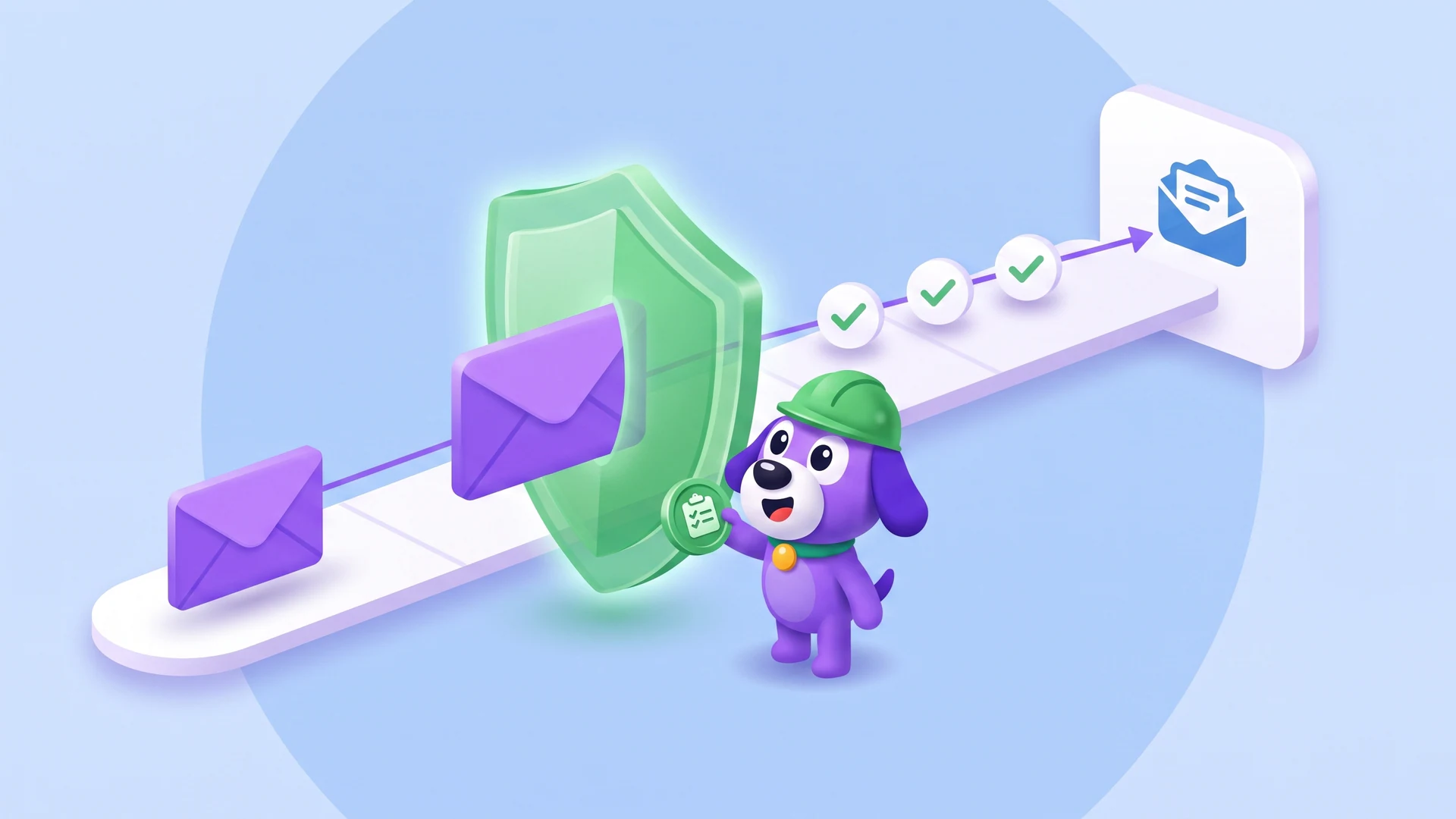
The Gmail guidelines require all senders to Gmail to have SPF or DKIM authentication, valid DNS, TLS, and a spam rate below 0.3%. Above 5,000 daily messages to personal Gmail accounts, SPF, DKIM, DMARC, and one-click unsubscribe are notably required for marketing messages.
Treat 0.3% as a limit never to approach, not as an acceptable target. The Gmail FAQ recommends staying below 0.1%.
Health metrics#
| Signal | Interpretation | Action |
|---|---|---|
| Rising bounces | stale data or insufficient verification | pause and audit the source |
| Spam complaints | poor targeting, frequency, or lack of transparency | stop the campaign |
| Rising opt-outs | unexpected message or overly broad segment | review ICP fit and intent signal |
| Negative replies ("not relevant") | wrong persona or incorrect assumption | fix targeting |
| Sudden drop in replies | reputation, seasonality, or offer issue | test infrastructure before rewriting copy |
Open tracking can be unreliable and its pixel can add a deliverability cost. Primary metrics to monitor are bounces, positive replies, opt-outs, and interest.
Pre-launch checklist#
Professional sending domain.
SPF, DKIM, and DMARC verified.
Identifiable sender address.
ICP and job titles clearly linked to the offer.
Source and date of intent signal retained.
Professional email addresses verified.
Privacy notice and opt-out included.
Suppression list active across all campaigns.
Sending limits and schedules configured.
Immediate sequence pause on reply or opt-out.
Data subject rights procedure documented.
Designated human operator monitoring the campaign.
What Flairo automates, and what remains your responsibility#
Flairo can prepare messages, verify address eligibility according to your settings, apply limits, log actions, centralize replies, and stop sequences. You remain responsible for your prospecting strategy, legal basis, privacy notices, sources, and compliance with rules applicable to your organization.
Next, set up a short LinkedIn + email sequence and start in Copilot.