A useful ICP does not just describe an industry, size, and country. It explains why a specific type of company is currently experiencing a problem that your product solves better than the alternatives. This level of detail changes your account list, monitored signals, messaging language, and how you qualify responses.
This guide is not a collection of abstract advice. It accompanies a Flairo task at the top of the page: answer a few questions, get a recommendation tailored to your context, and copy the deliverable into your CRM or your next sales sprint. No account creation is required to test the experience.
The decision this guide should help you make#
You need to choose an initial segment that is narrow enough to learn quickly, but broad enough to identify patterns. Therefore, a good outcome is not "SaaS SMEs in France". It is a testable hypothesis: company type, trigger event, cost of the problem, the person experiencing it, available proof, and probable reason for refusal.
Start with the best problems, not the prettiest logos#
List the customers or conversations where the need was urgent, the sales cycle smooth, and the value obvious. Look for common circumstances: recent hiring, entering a new market, switching tools, team growth, or regulatory pressure. A prestigious but atypical account can distort your entire strategy. Conversely, three small sales closed for the exact same reason already represent a compelling signal.
Building the ICP profile in four layers#
The first layer describes the company: business model, maturity, and constraints. The second describes the situation: recent event and operational impact. The third identifies the committee: user, champion, decision-maker, and blocker. The fourth gathers evidence: verbatim feedback, public data, tools used, and results already achieved. Every field should have the power to change a targeting or messaging decision.
Assign distinct scores for fit and timing#
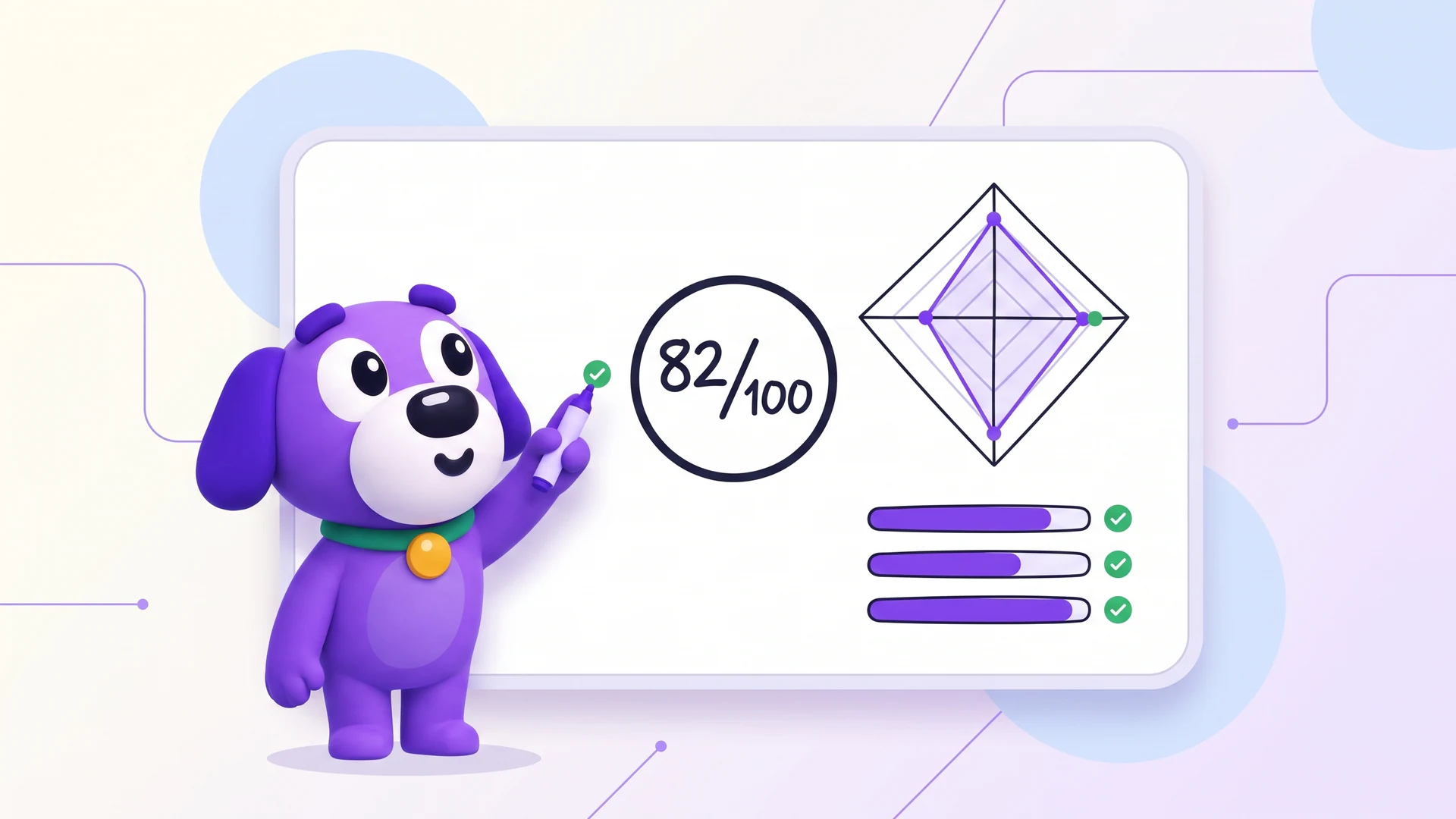
Fit measures structural compatibility; timing measures the likelihood that the problem is currently active. Don't combine them too early. A perfectly compatible account with no trigger event can remain on nurture, while a slightly less ideal account facing a strong trigger event deserves an immediate conversation. Use the outbound maturity diagnostic to verify that your process can leverage this nuance.
Validate with conversations and negative data#
Interview prospects who didn't buy as well. Ask what makes the problem manageable, what alternative they are using, and what event might shift their priorities. Negative criteria are invaluable: budget mismatch, overly long sales cycle, rare need, wrong channel, or technical dependency. An ICP profile without exclusion criteria quickly becomes an excuse to contact the entire market.
The actionable seven-day sprint#
The goal of a short sprint isn't to automate everything. It serves to reduce uncertainty with a small set of observable actions. Keep the same target, the same offer, and the same definition of success for one week; otherwise, you won't know what drove the result.
- 01
Day 1 — Gather ten customers, opportunities, or conversations and note the actual context of each.
- 02
Day 2 — Formulate three competing segments with one reason to buy and one reason not to buy.
- 03
Day 3 — Collect five pieces of public evidence or verbatim quotes for each segment.
- 04
Day 4 — Score twenty accounts without changing the scoring criteria after seeing the results.
- 05
Day 5 — Contact five accounts in the winning segment using a message tied to a verifiable observation.
- 06
Day 6 — Review responses, objections, and silences. Separate targeting, timing, and messaging issues before modifying the campaign.
- 07
Day 7 — Keep what generated a useful conversation, document what failed, and choose a single hypothesis to test the following week.
Measuring without fooling yourself#
First, track the rate of truly qualifiable accounts, then the proportion of messages that get a response related to the core problem. An ICP is refined when the same objections, triggers, and consequences consistently reoccur. Don't validate a segment based on response rate alone: curiosity does not equal buying intent.
Activity metrics—volume sent, views, or connections—describe input work. Progression metrics—relevant replies, qualified conversations, held meetings, and opportunities—describe value created. A good learning loop always connects both and maintains a sample of the actual messages sent.
How to use it with Flairo#
Start with the custom deliverable on this page. Then, turn each hypothesis into a tightly focused campaign: one segment, one signal, one angle, and one call to action. Flairo can centralize research, scoring, email and LinkedIn sequences, and reply analysis. AI's role isn't to dress up a generic message; it's to make a specific observation faster to act upon.
To build the full system, continue with the buying signals prospecting guide, the ICP + timing scoring model, and the 30-day outbound playbook.