One-Minute Verdict#
| Choose… | If your priority is… |
|---|---|
| Flairo | getting a guided flow of contextualized prospects all the way to replies |
| Apollo | searching a large database and engaging from the same platform |
| Clay | building custom data and enrichment workflows |
| lemlist | executing email and LinkedIn sequences on qualified lists |
| La Growth Machine | automating a heavily multichannel motion by identity |
No tool is "the best" without context. They don't start from the same point and don't require the same operational resources.
Comparison verified against official pages available on July 31, 2026. Features and pricing are subject to change.
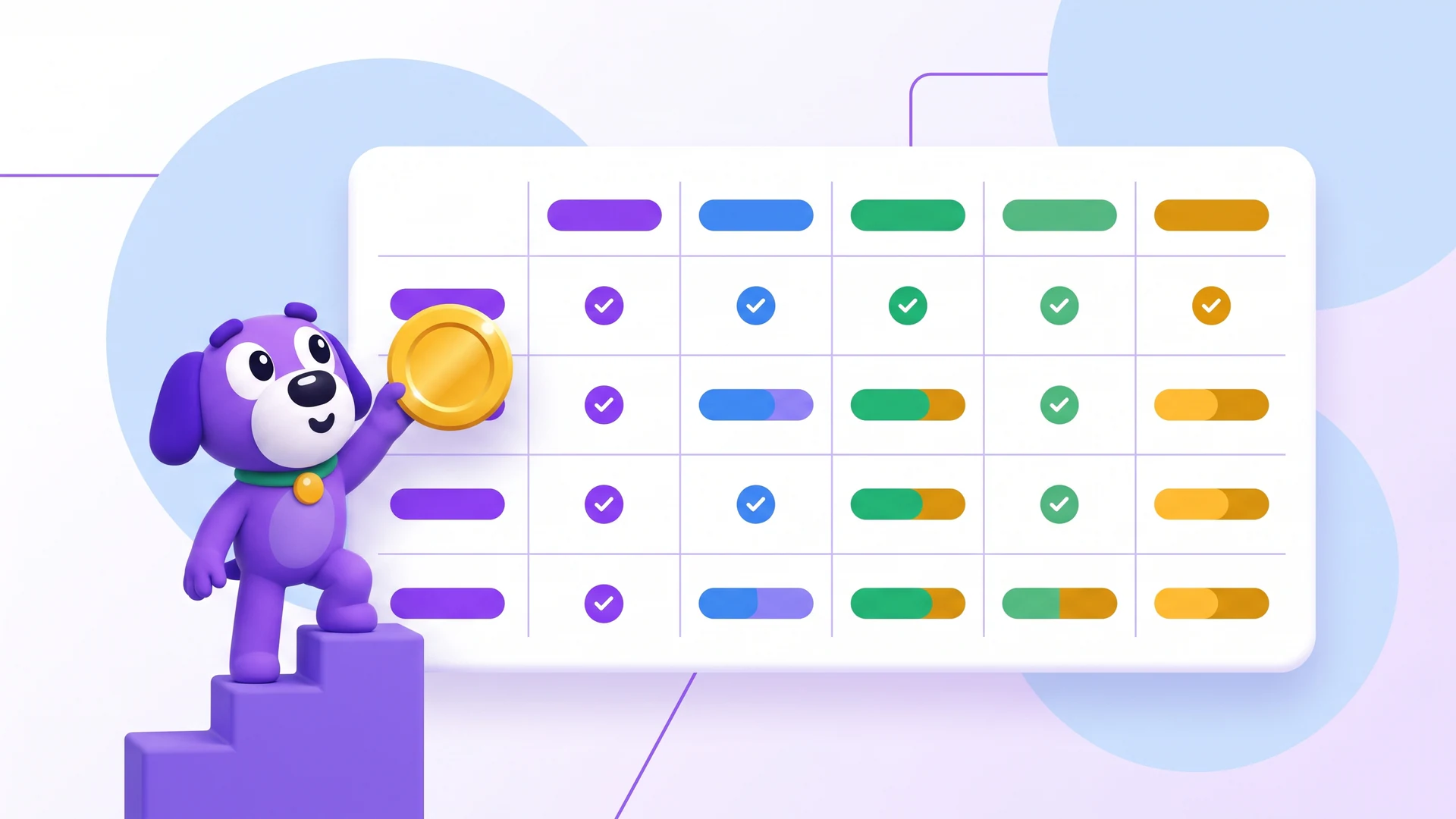
The Comparison Matrix#
| Criterion | Flairo | Apollo | Clay | lemlist | LGM |
|---|---|---|---|---|---|
| Starting point | offer, ICP, signals | filters, database, CRM | tables, data, workflows | lead list | list, LinkedIn, or database |
| Signal detection | core of the workflow | intent and enrichments depending on plan | highly configurable | mostly via imported and enriched data | qualification and enrichment |
| Enrichment | built into the prospect | large database and waterfall | very broad ecosystem | email waterfall and data | email waterfall |
| AI Copywriting | offer context + signal | assistant and personalization | agents and formulas | campaign AI | AI assistant |
| Copilot, Autopilot | sequences | native sequencer or integrations | core of the product | multichannel core | |
| connection requests and messages | social tasks based on workflow | via integrations/workflows | LinkedIn steps | core of the product | |
| Unified replies | email + LinkedIn | engagement and reporting | depends on setup | inbox and campaign | multichannel inbox |
| Setup | guided | intermediate | advanced | intermediate | intermediate |
| Ideal profile | founder, agency, small team | SDRs and sales teams | RevOps, growth engineer | outbound with lists | LinkedIn/email outbound |
Flairo#
What Flairo does differently
Flairo views a campaign as a complete mission: offer, target, signals, prospects, outreach mode, sequence, and results. The signal and its source remain visible all the way to the message.
Users choose their level of control:
Copilot to review and approve each approach;
Autopilot to execute proven rules automatically.
Email and LinkedIn replies come back to a single inbox, alongside prospect and campaign history.
Choose Flairo if
you are a small team without dedicated RevOps;
you don't want to start with a cold list;
timing and context are your primary advantage;
you want to learn from approvals and replies;
you prefer an integrated workflow over a composable stack.
Don't choose Flairo if
your top priority is a database of hundreds of millions of contacts;
you want to build every enrichment step and branch yourself;
your motion relies on a dialer or a highly customized enterprise CRM.
Apollo#
Apollo combines a B2B database, search, enrichment, scoring, sequences, and analytics. It's a solid choice for teams looking to consolidate data and engagement around a massive universe of contacts.
Choose Apollo if
data coverage is your primary requirement;
your SDRs rely on filters and list-building at scale;
you want sequences, tasks, and reporting inside the same platform;
your team already has a proven prioritization method.
How it differs from Flairo
Apollo naturally starts from its data graph and filters. Flairo starts from a campaign and looks for offer-relevant changes before serving up a queue of prospects. One optimizes for breadth and engagement; the other guides a motion built around "why now."
Clay#
Clay lets you assemble data providers, signals, research agents, scoring, and routing. It is the most modular option in this comparison.
Choose Clay if
a RevOps specialist or growth engineer owns the system;
you have first-party data to combine;
your signals are custom and accessible via API or web research;
you are willing to build and maintain the workflow yourself.
How it differs from Flairo
Clay provides a GTM toolkit. Flairo provides an opinionated product workflow. With Clay, you are responsible for the logic; with Flairo, the campaign, feedback, execution modes, and guardrails are already wired together.
lemlist#
lemlist focuses on multichannel outreach, enrichment, and campaign personalization.
Choose lemlist if
your lists are already qualified;
your main bottleneck is execution and follow-ups;
you need email + LinkedIn branching;
your team knows how to manage deliverability.
How it differs from Flairo
lemlist is primarily a powerful campaign engine. Flairo places heavier emphasis on building target lists, verifying signals, reviewing prospects, and tracking interest end-to-end.
La Growth Machine#
La Growth Machine orchestrates LinkedIn, email, and calls around identity, with enrichment and campaign templates.
Choose LGM if
LinkedIn is central to your outreach strategy;
you want visual multichannel automation;
your team already knows who to import and which play to execute;
identity-based management fits your organizational setup.
How it differs from Flairo
LGM optimizes audience orchestration. Flairo first focuses on generating the audience and outreach angle from signals before offering orchestration.
The Hidden Costs to Compare#
The sticker price doesn't tell the whole story. Calculate:
| Cost | Question |
|---|---|
| Data | do you need to buy extra credits or a separate database? |
| Enrichment | what is the real cost of a reachable prospect? |
| Infrastructure | do you need to add inboxes, domains, or warm-up tools? |
| Operations | who builds and maintains the workflows? |
| Validation | how much human time is spent per prospect? |
| Replies | do you need another tool to avoid missing replies? |
| CRM | how much sync and data cleanup remains manual? |
A cheaper per-seat platform can end up costing more if it requires three additional subscriptions and a day of RevOps work every week.
The Litmus Test#
Give each solution the same brief and 50 target accounts. Measure:
- 01
time to first contact-ready prospect;
- 02
percentage of approved prospects;
- 03
presence of a signal source and timestamp;
- 04
coverage of the target persona/role;
- 05
verified email rate;
- 06
time required to review/edit messages;
- 07
ease of stopping sequences upon reply;
- 08
visibility all the way to confirmed interest.
Then choose the system your team can actually operate for six months. To explore choices across other categories, check out our comparison of 10 B2B prospecting tools.