Quick Answer#
To generate leads on LinkedIn with your posts, don't focus on virality first. Publish ideas that help your ideal customer recognize themselves, observe who reacts, qualify their profile, and initiate a conversation only when the context justifies it.
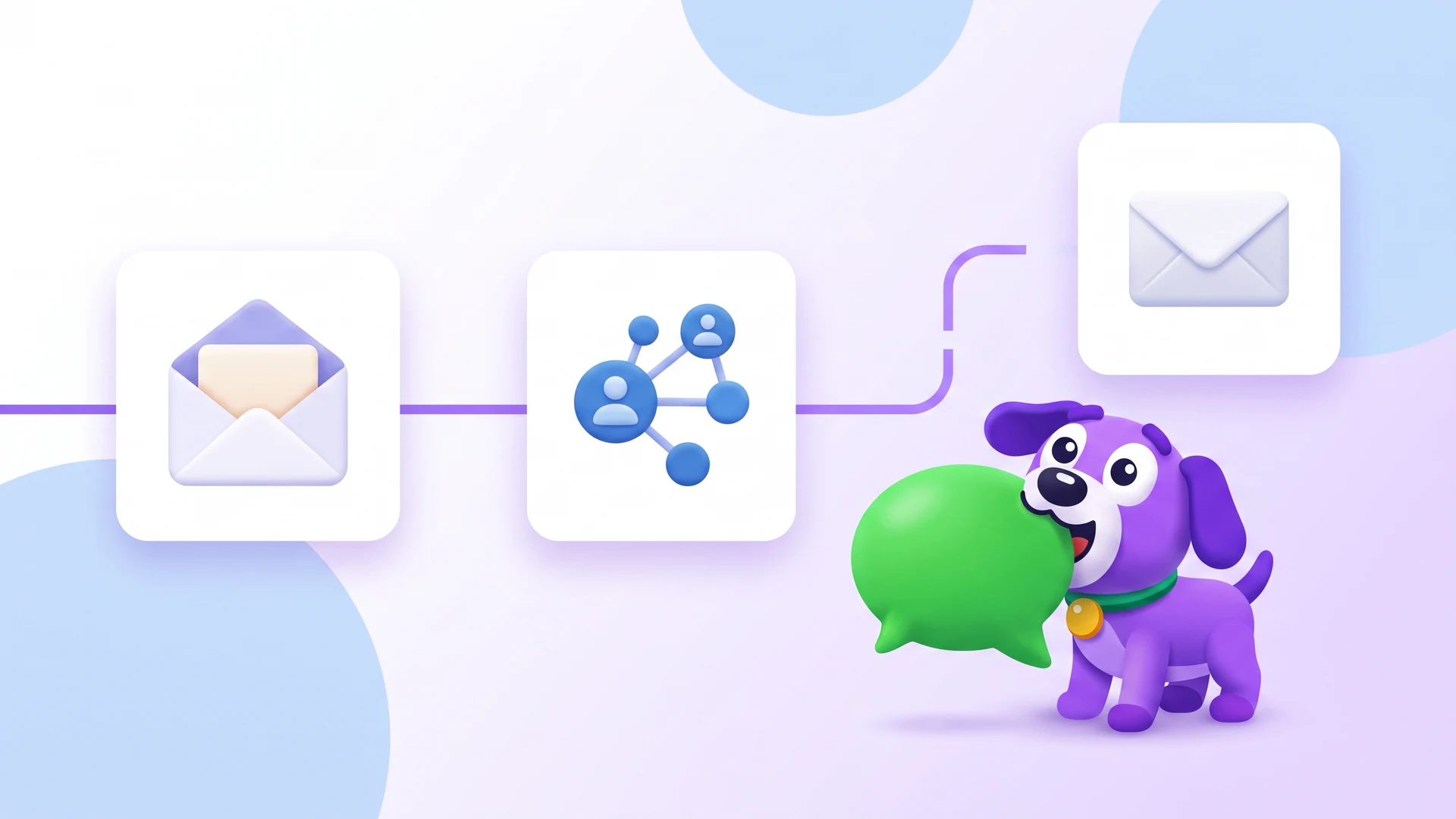
The framework consists of five steps: attract, observe, qualify, converse, measure. The post creates the context. The comment or reaction creates a signal. Qualification turns that signal into a prospective lead. Finally, the conversation confirms or invalidates the opportunity.
This distinction protects against the main trap of social selling: confusing audience size with pipeline.
Why Posts Can Build Pipeline#
In B2B purchasing, most people exposed to your expertise don't fill out a form immediately. They learn, compare, and remember credible players before they ever start an active project. The 2025 Edelman–LinkedIn report, based on nearly 2,000 professionals, highlights the role of "hidden" decision-makers who discover and evaluate content without necessarily surfacing during the sales process.
LinkedIn content serves three main functions:
Making your expertise visible before an explicit need arises;
Giving prospects a concrete reason to start a conversation;
Generating social signals that you can carefully qualify.
LinkedIn notes that 73% of surveyed decision-makers view thought leadership as a more credible basis than traditional marketing materials for evaluating an organization's capabilities. This doesn't mean every reader wants to buy. It means the right content reduces uncertainty before the sales conversation even begins.
The Content-to-Lead Funnel#
| Stage | What You Observe | Actionable Decision |
|---|---|---|
| Impression | A person may have seen the post | No individual action |
| Interaction | Like, comment, share, profile visit | Evaluate signal strength |
| Qualification | Role, company, topic, and timing align | Decide whether to create a lead |
| Conversation | Contextualized, consensual dialogue | Understand the issue |
| Opportunity | Need, priority, and next step exist | Pursue commercially |
Jumping directly from a "like" to a sales pitch ruins the context. The prospect didn't ask for anything, and you don't know what caught their attention. Conversely, a detailed comment offers a great opening: the user named a situation, asked a question, or shared an experience.
The rule is simple: the weaker the signal, the less intrusive your action should be.
The Four Types of Posts That Attract the Right Profiles#
1. The Relatable Diagnostic
Describe a problem with enough precision that your target audience recognizes themselves in it.
“Many teams think they lack leads. Sometimes their real bottleneck comes later: they reach out to fit accounts, but without a compelling current reason for those accounts to reply.
A good diagnostic doesn't dramatize. It identifies a mechanism, reveals its symptoms, and offers a way to verify it.
2. The Actionable Method
Share a framework, process, or brief checklist. Readers should be able to try something out without buying anything.
Example: three questions to distinguish a real buying signal from routine news. This format attracts people actively facing the issue and generates richer comments than generic opinion posts.
3. The Explained Proof
Proof isn't just about impressive figures. It can be a before/after scenario, a tough decision, a documented failure, or an anonymized process breakdown.
Always share the context, the decision made, and the limitations. Saying "We doubled response rates" means little without specifying the target, timeframe, volume, and actual change implemented.
4. The Well-Reasoned Perspective
Take a stance on a standard practice in your market, then explain your reasoning. The goal isn't artificial controversy, but helping the reader reconsider an assumption.
The 2024 LinkedIn–Edelman report highlights how strong content can prompt buyers who aren't actively in the market to reconsider a problem.
Qualifying an Interaction Without Inventing Intent#
Not all interactions carry the same weight. Use a four-tier evaluation.
| Signal | Initial Strength | Verification Before Action |
|---|---|---|
| Like or reaction | Low | Does the profile genuinely match your ideal target? |
| Profile visit | Low to Moderate | Does it follow a post directly tied to your offering? |
| Generic comment | Moderate | Does the person provide real context? |
| Detailed question or experience | High | Does the problem affect their company right now? |
Then evaluate three key dimensions:
- 01
Fit: Do their role and company match your ideal customer profile (ICP)?
- 02
Topic: Does the interaction focus on a problem you solve?
- 03
Timing: Is there a change or trigger that makes the topic relevant now?
A user can be highly engaged without ever becoming a customer. Another might read your posts silently for three months and reach out only when a need arises. Your framework must account for this nuance.
How to Start the Conversation#
First, respond publicly whenever a comment warrants a public reply. This demonstrates that your post is a space for discussion, not a disguised lead form.
If moving to a private message makes sense, anchor it in the exact context:
“Thanks for sharing that example about the team restructuring lead acquisition. When you mention targeting got too broad, is that primarily a data issue or a prioritization problem?
This message works better than a pitch because it continues an established conversation. It doesn't assume a need, and it asks an easy-to-answer question.
Be mindful of technical constraints: LinkedIn notes that direct messaging is typically restricted to 1st-degree connections. For non-connections, messaging options depend on user settings, shared groups, or InMail subscriptions. Avoid building a workflow that assumes a private message is always feasible.
The Simplest Weekly Workflow#
To get started, two posts per week are enough to learn without turning your calendar into a continuous writing marathon.
Before Publishing
Choose a single problem and a single target audience;
Frame the core message in one sentence;
Add an example, proof point, or framework;
End with a natural question or a logical next step.
On Publishing Day
Review the post on mobile;
Respond thoughtfully to relevant comments;
Note recurring questions;
Do not reach out to someone simply because they clicked "Like".
Two Days Later
Filter for truly relevant profiles;
Create a lead entry only when clear account fit exists;
Attach the post and interaction details as context;
Initiate a brief conversation if justified.
Findings from a Buffer study analyzing over two million posts suggest that increasing posting frequency from once a week to 2–5 times can boost reach and engagement. This reflects a correlation observed across accounts using Buffer, not a universal rule. Start with a cadence you can reliably maintain while keeping quality high.
Measuring Progress Without Complex Dashboards#
LinkedIn provides impressions, members reached, profile views, and new followers for member posts. While these analytics help track reach, LinkedIn notes that they remain estimates.
Layer on just three key business metrics:
| Metric | Formula | What It Reveals |
|---|---|---|
| Qualified interactions | ICP profiles reacting or commenting | Target audience quality |
| Conversations started | Meaningful dialogues stemming from the post | Content's ability to drive engagement |
| Influenced opportunities | Pipeline deals that engaged with or cited the content | Direct pipeline impact |
Don't just compare individual posts—compare core themes. After 8 to 12 posts, you will spot which problems attract key buyers, which proof points prompt questions, and which formats produce reach without driving business outcomes.
What Flairo Should Automate—and What Remains Human#
A smart tool can:
Generate content ideas based on your offer and target audience;
Draft and schedule posts;
Aggregate reactions and comments;
Help filter profiles matching your target criteria;
Link each lead to the post that triggered the signal.
The decision to reach out, comment interpretation, and direct messaging must remain user-controlled. LinkedIn prohibits third-party software that automates platform activity, and its 2026 update on authentic content and conversations indicates that automated comments and artificial engagement pods may face restricted reach or enforcement actions.
The right software doesn't promise an automated comment factory. Instead, it streamlines preparation, turns raw engagement into clear signals, and empowers the user to take the right action.
The 7-Day Starter Plan#
- 01
Define a target audience and three problems they immediately recognize.
- 02
Write one diagnostic post and one methodology post.
- 03
Schedule them on different days.
- 04
Manually reply to meaningful comments.
- 05
Qualify profiles based on fit, topic, and timing.
- 06
Convert only qualified profiles into leads.
- 07
Track conversations and opportunities, then select the next topic.
To build this routine without staring at a blank page, check out our 30-day LinkedIn content calendar. To periodically offer a resource in exchange for a comment, follow our LinkedIn lead magnet guide.