The first ten customers rarely come from a perfectly optimized outbound machine. They come from a blend of close networks, warm introductions, manual conversations, and the ability to listen to the problem before pitching the product. Networking is not a shameful shortcut: it is your primary research channel.
This guide is not a collection of abstract advice. It accompanies a Flairo mission located at the top of the page: answer a few questions, get a recommendation tailored to your context, then copy the deliverable into your CRM or your next sales sprint. No account creation is required to try the experience.
The Decision This Guide Should Help You Make#
You need to decide who can teach you something this week: a direct buyer, someone facing the problem, a credible connector, or an industry expert. The personalized mission turns your context into a contact map and introduction scripts, without prompting you to spam your family or former colleagues.
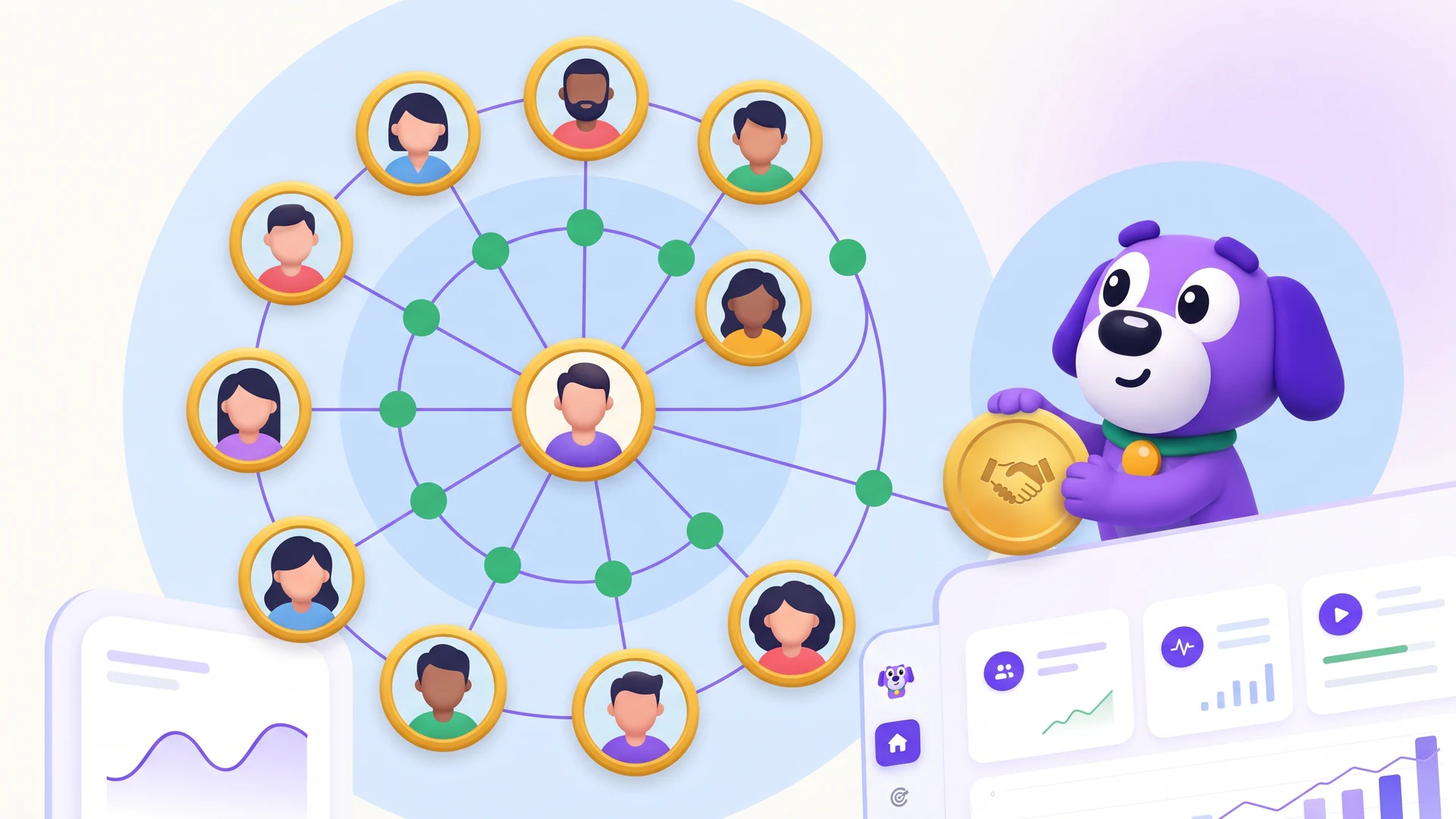
Mapping Four Circles of Trust#
Start with people who know you well, followed by former colleagues and clients, LinkedIn connections with genuine history, and finally professional communities. Assign a role to each contact: potential user, buyer, recommender, connector, or challenger. You do not ask the same thing from everyone. A challenger can destroy a bad hypothesis before it costs you three months.
Asking for a Conversation, Not a Sales Favor#
A good message explains what you are trying to understand, why that person is relevant, and how much time you are requesting. Avoid asking "can you share this around?" without context. Prefer a specific request: twenty minutes to validate three hypotheses, or an introduction only if the described problem appears to be actively faced by someone.
Selling a Narrow, Hands-On Outcome#
In the beginning, narrow the promise and increase hands-on support. Offer a pilot with a clear scope, duration, success criteria, and exit point. The goal is not to discount indefinitely; it is to make the decision reversible and produce proof. Then document what should remain manual and what can become part of the product.
Turning Every Exchange into the Next Branch#
At the end of a conversation, ask: “Who else is facing this problem in a similar context?” and “What would prevent you from recommending this trial?”. A qualified introduction is worth more than a list of a hundred contacts. Supplement this channel with the B2B community directory once your initial circles are exhausted.
The Concrete 7-Day Sprint#
The goal of a short sprint is not to automate everything. It serves to reduce uncertainty through a small number of observable actions. Keep the same target, the same offer, and the same definition of success for a week; otherwise, you won't know what drove the result.
- 01
Day 1 — list fifty contacts and classify them by role, trust, and proximity to the problem.
- 02
Day 2 — select ten people from whom to request insights, not a sale.
- 03
Day 3 — conduct three short interviews and note their exact words.
- 04
Day 4 — offer a narrow pilot to profiles who acknowledge an urgent problem.
- 05
Day 5 — ask for a contextualized introduction from every contact who doesn't fit the profile themselves.
- 06
Day 6 — review responses, objections, and silences. Separate target, timing, and message issues before modifying the campaign.
- 07
Day 7 — keep what produced a useful conversation, document what failed, and choose a single hypothesis to test the following week.
Measuring Without Fooling Yourself#
Measure conversations obtained per circle, confirmed problems, agreed-upon introductions, launched pilots, and paying customers. Response rate matters less than learning density: a precise objection is worth more than ten polite responses that lead nowhere.
Activity metrics—volume sent, views, or connections—describe output. Progression metrics—relevant responses, qualified conversations, held meetings, and opportunities—describe created value. A good feedback loop always connects the two and keeps a sample of the messages actually sent.
How to Use It with Flairo#
Start with the personalized deliverable on this page. Then turn each hypothesis into a scoped campaign: one segment, one signal, one angle, and one call to action. Flairo can centralize research, scoring, email and LinkedIn sequences, and response analysis. AI's role is not to polish a generic message; it is to make a specific observation faster to act upon.
To build the complete system, continue with the buying signal prospecting guide, the ICP + timing scoring model, and the 30-day outbound playbook.