The Short Answer#
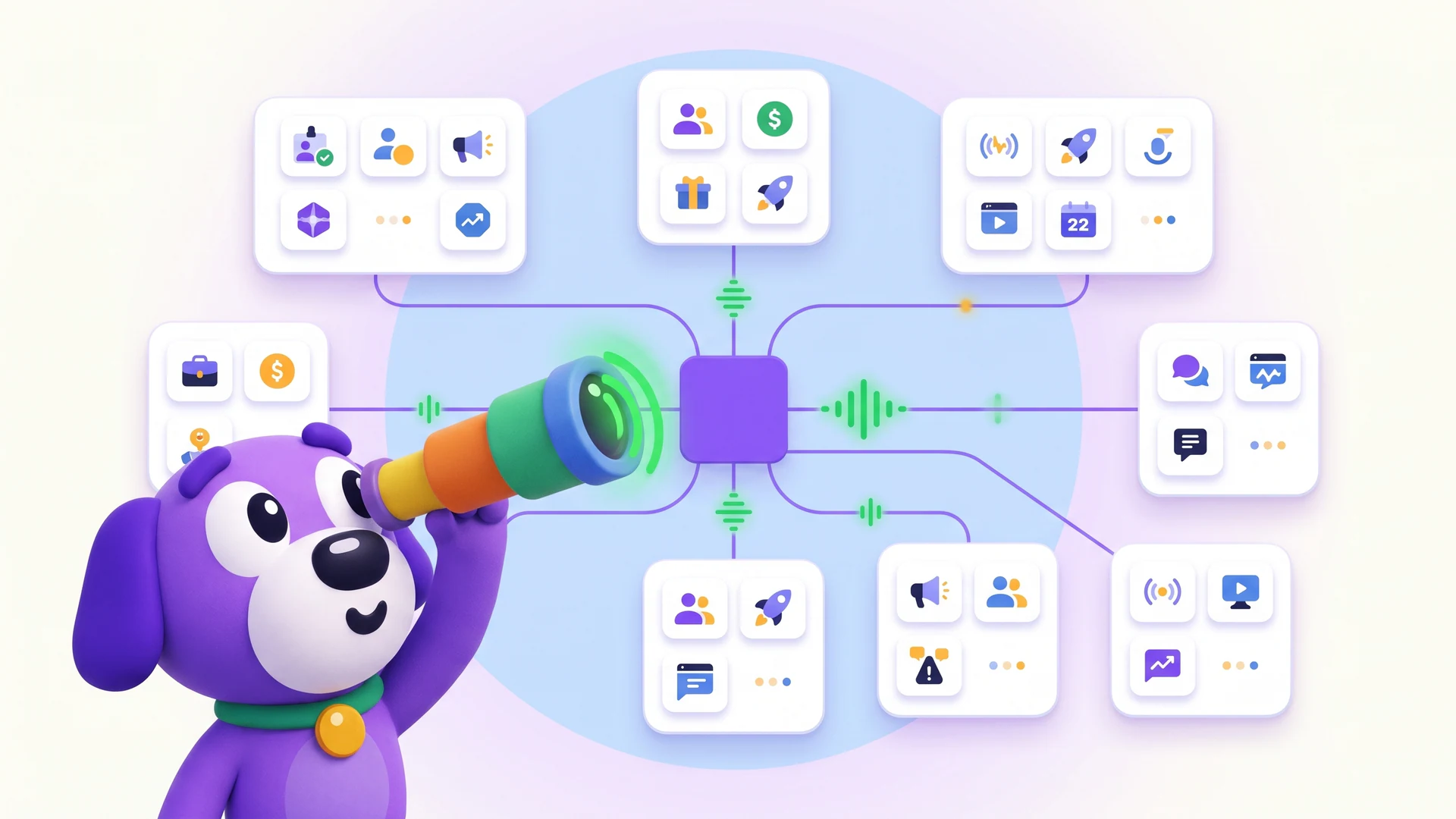
Intent data seeks to estimate whether an account is interested in a category or a vendor. A buying signal is broader: any observable change that alters the probability or urgency of a need.
| Type | Example | What You Can Conclude |
|---|---|---|
| First-party intent | repeated visits to a pricing page | interest in your offer, identity sometimes unknown |
| Third-party intent | increased research on a category | probable interest from the account, methodology needs verification |
| Company signal | hiring, executive appointment, expansion | context likely to create a need |
| Social signal | request, comment, post | active topic for the author or their network |
| Relationship signal | former champion changes companies | potential access and trust |
The danger lies in the vocabulary: labeling every activity a “buying signal” gives sales reps false confidence.
First-Party Data: The Signal Closest to You#
Your own data can include:
visited pages;
demo requests;
sign-ups or free trials;
product usage;
campaign responses;
downloaded content;
event attendance;
support or sales conversations.
These signals are closely tied to your offering, but they require proper identification and privacy frameworks. A single page visit isn't enough to declare that an account is in-market.
Third-Party Intent: An Estimate of Research#
Intent providers aggregate behaviors observed across networks of websites, content, or ad data. They can indicate that an account is showing higher-than-baseline interest in a topic.
Before buying, ask:
- 01
what activity is being measured;
- 02
how the company is identified;
- 03
what the time window is;
- 04
what volume triggers a "surge";
- 05
what coverage exists in your market;
- 06
how compliance and rights are managed.
A proprietary score without a clear origin is hard to use in outbound messaging.
Company Signals: The Public "Why Now"#
Company changes are often verifiable:
hiring;
funding rounds;
product launches or pricing changes;
geographic expansion;
executive appointments;
tech stack changes;
RFPs / calls for proposals;
new regulatory constraints.
They are less directly tied to explicit intent, but easier to reference. A salesperson can mention the event without sounding like covert surveillance.
Social Signals: Between Social Listening and Prospecting#
A post can express:
a problem;
a priority;
a request for recommendations;
an objection;
an initiative;
a reaction to an event.
Don't turn every keyword into a lead. Verify the company, role, date, and context. A general discussion about AI doesn't indicate an active project to buy an AI sales agent.
Signal Stacking#
Combining multiple events reduces false positives:
“a new CRO arrives + the company hires ten reps + they launch an Enterprise offering.
This combination supports a go-to-market transformation hypothesis. It should only increase the score if:
the sources are distinct;
the dates are aligned;
the events point to the same priority;
your offer is causally linked;
a different action results from it.
From Data to Action#
For each signal, create a spec sheet:
| Field | Example |
|---|---|
| Event | 8 open SDR positions |
| Source | careers page |
| Date | July 29, 2026 |
| Fit | B2B SaaS, 80 employees, France |
| Hypothesis | need to standardize targeting and follow-ups |
| Role | Head of Sales or RevOps |
| Play | offer a campaign framework |
| Expiration | end of hiring drive |
LinkedIn highlights that top sellers use sales intelligence to prioritize accounts and do more research on prospects before reaching out. The value doesn't come from the "intent" badge itself, but from the quality of the decision it enables.
How Flairo Uses Signals#
Flairo starts with your campaign: offer, ICP, target personas, exclusions, and priority events. The platform scans public sources, connects the signal to your offering, identifies a contact, and prepares a message.
The prospect remains verifiable. You can dismiss an account, specify the reason, and improve future searches. In Copilot mode, execution waits for approval; in Autopilot mode, it follows proven rules.
The Decision Rule#
Don't ask "do we have intent data?". Ask:
“Does this data change who we contact, when we reach out, and what we can honestly say?
If the answer is no, you probably have an interesting piece of information, not an actionable signal. Use the 100-point scoring model to test its value.