Playbook Objective#
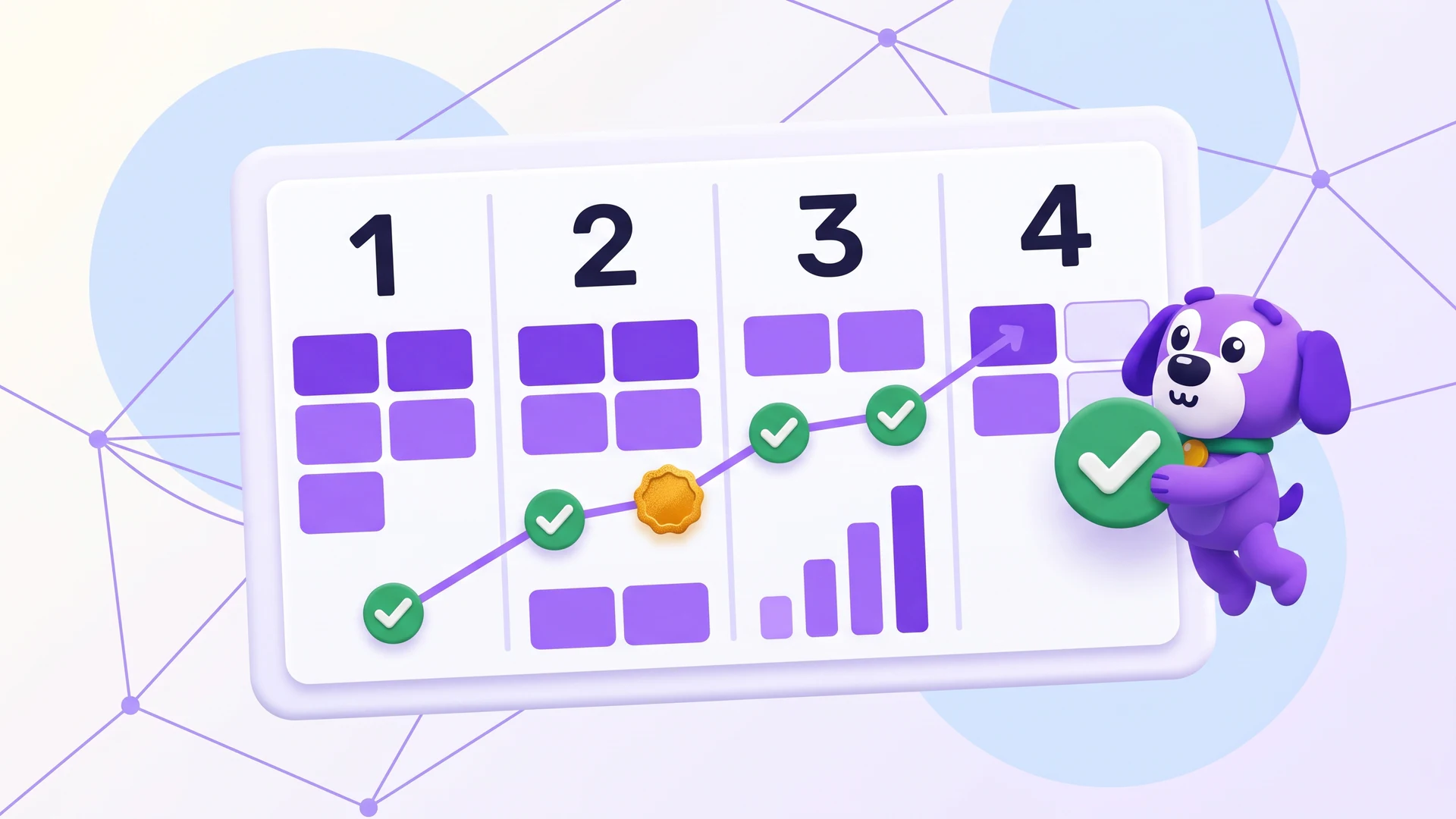
In 30 days, you need to achieve three things:
- 01
a campaign with clear, understandable targeting;
- 02
a sequence you feel confident sending;
- 03
a baseline connecting detected prospects to confirmed interest.
You are not trying to "scale" yet. You are looking to prove that a combination of offer + segment + signal + role + message generates conversations.
Before Day 1: Set Up the Guardrails#
Prepare:
a properly authenticated professional inbox;
a centralized suppression list;
a simple sentence explaining your offer;
two examples of customers or situations you know how to help;
daily capacity to process replies;
a clear owner for the campaign.
If you cannot respond to a positive reply within the business day, reduce your volume.
Week 1: Build a Testable Campaign#
Day 1 — Choose a Single Offer
Avoid "we do consulting, design, and development." Choose the outcome easiest to connect to an observable change.
“We help B2B SaaS companies structuring a sales team standardize their prospecting without immediately hiring a RevOps.
Day 2 — Write the ICP and Exclusions
| To Define | Example |
|---|---|
| Industry | B2B SaaS |
| Size | 20 to 200 employees |
| Region | France and Belgium |
| Role | Head of Sales, CRO, Founder |
| Exclusions | agencies, competitors, companies without a sales team |
Exclusions are as important as positive criteria. They prevent manually "fixing" the same mistakes repeatedly.
Day 3 — Choose Three Signals
Each signal must trigger a play:
| Signal | Hypothesis | Action |
|---|---|---|
| SDR/AE Hiring | the team needs to standardize its practices | offer a process diagnostic |
| New Enterprise Offer | targeting and messaging are becoming more complex | share a qualification framework |
| New Head of Sales | a roadmap is under construction | ask if prospecting is part of the mandate |
Day 4 — Build One Message per Signal
Write an observation, a possible consequence, proof, and a question. Keep it under 100 words; Gong's data links short formats, around three to four sentences, to higher response rates.
Day 5 — Set Up Tracking
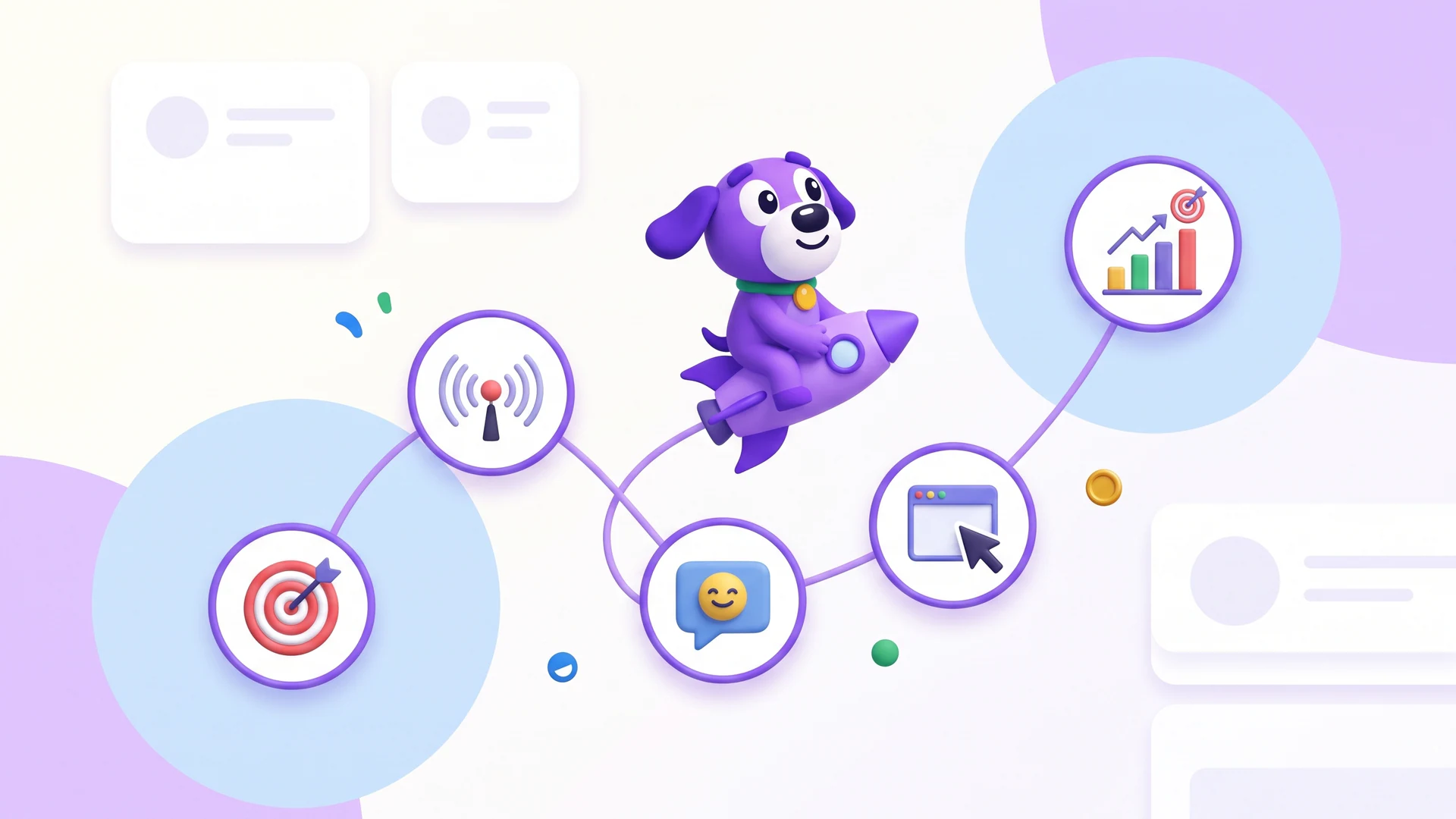
In Flairo, create the campaign, choose the modes, and verify the flow: Targeting → Prospects → Automation → Replies → Analytics. Start in Copilot mode.
Week 2: Launch at Low Volume#
Process 5 to 10 new accounts per day.
For each prospect:
- 01
open the signal proof;
- 02
check the date;
- 03
confirm the link with the offer;
- 04
verify the role;
- 05
review only the first sentence and the question;
- 06
approve or reject with a reason.
Do not rewrite everything. If the same edit comes up three times, modify the campaign rule.
The Starting Sequence
| Day | Channel | Goal |
|---|---|---|
| Day 0 | email or LinkedIn connection request | establish context |
| Day 3 or Day 4 | second channel | add proof or a new angle |
| Day 8 | short email | close the loop without pressure |
Stop as soon as a reply, opt-out, or targeting error is detected.
Week 3: Learn from Replies#
Categorize every reply into an actionable bucket:
| Reply | What It Teaches You |
|---|---|
| Interested | the combination deserves more volume |
| Not right now | the signal or timing is too weak |
| Wrong person | the role needs to be adjusted |
| Not relevant | the causal hypothesis is wrong |
| Already equipped | the differentiation angle is insufficient |
| Opt-out | the prospect is immediately removed from outreach |
Do not ask AI to draw conclusions on its own from a small sample size. Read the actual responses.
The Day 15 Checkpoint
Answer four questions:
Is at least half of the detected prospects justifiable?
Are the sources recent enough?
Do the messages state a hypothesis without making things up?
Are positive replies coming from a specific signal?
If validation is poor, do not increase send volume.
Week 4: Optimize a Single Lever#
Choose the main point of friction:
Detection → Validation
Work on your ICP, exclusions, or signal definition.
Validation → Reply
Work on the role, opening line, proof, or question.
Reply → Confirmed Interest
Work on response speed and the next step. A positive reply is not an opportunity yet.
Interest → Meeting
Reduce friction: suggest two time slots or share a short resource before asking for a long demo.
The Day 30 Review#
| Question | Possible Decision |
|---|---|
| Which segment generated the most interest? | Prioritize it |
| Which signal produced noise? | Remove or refine it |
| Which role responds positively? | Adjust the contact hierarchy |
| Which objection comes up repeatedly? | Fix the offer or message |
| Which step still requires human judgment? | Keep it in Copilot |
| Which step is now predictable? | Automate it |
Document the winning version before launching a new test.
Moving from Copilot to Autopilot#
The transition makes sense when:
exclusions are stable;
the signal is verifiable;
messaging no longer requires structural changes;
send limits and schedules are configured;
email or LinkedIn accounts are connected;
stops on reply and unsubscribe are tested;
someone handles the reply inbox daily.
Automation does not replace strategy. It executes an already understood strategy more consistently.
The Final Rule#
Add volume only after improving accuracy. If you want to benchmark this test with clean numbers, use the 2026 B2B prospecting benchmark and the LinkedIn + email sequence.